Information Package / Course Catalogue
Eskişehir Osmangazi University
-
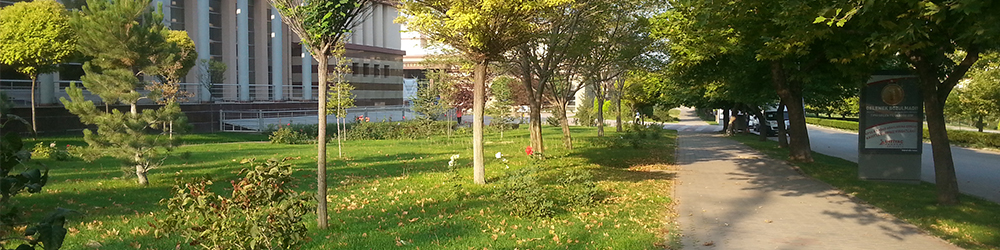
Walking Area
-
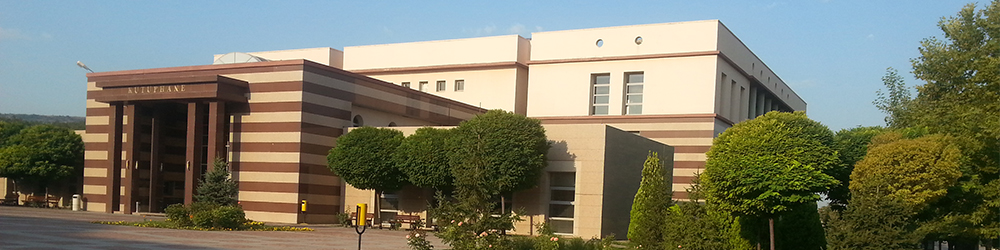
Library
-
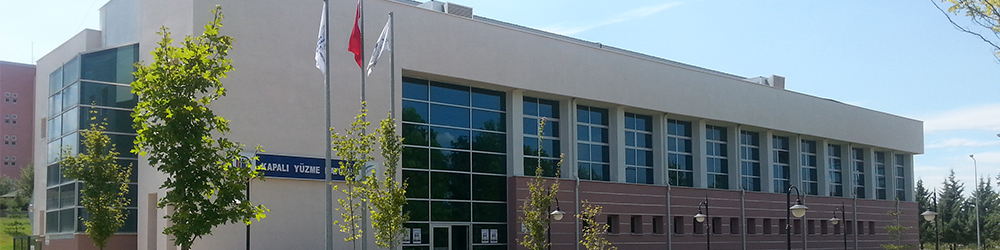
Indoor Swimming Pool
-
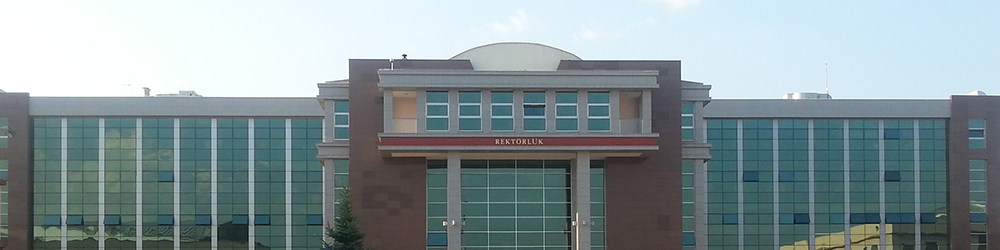
Rectorate Building
-
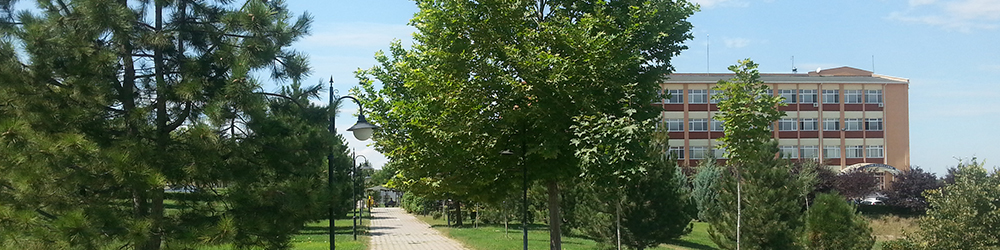
Faculty of Education
Mining Engineering Department
1. General Information
Eskişehir is one of the most popular mining centers in Türkiye and possesses significant metallic and industrial reserves such as boron salts, chromium, magnesite, gold, marble, and meerschaum. In order to support the activities of the enterprises located in this important mining center, the Department of Mining Engineering was established in Eskişehir in 1975. The department includes the divisions of Mining Operations, Mineral Processing, and Mining Mechanization and Technology. The aim of the department is to educate Mining Engineers equipped with the knowledge, skills, and competence to operate underground resources consciously and with maximum efficiency and to contribute them to the national economy. In the department, undergraduate students are provided with Mining Engineering education both theoretically and practically. Students receive fundamental Mining Engineering education during the first two years, and in the third and fourth years, they are given the opportunity to specialize in one of the divisions of interest through elective courses. In addition, laboratory facilities in Mineral Processing, Rock Mechanics, Physico-Chemistry, Mineralogy-Ore Deposits, and Ornamental and Semi-Precious Stones, which have reached a highly advanced level in terms of Mining Engineering and research, continue to be developed in accordance with the requirements of the information and technology age. Graduates of the department are employed in public and private workplaces in all areas of the Turkish Mining Sector.
2. Degrees Offered
Students who successfully complete the program are awarded a Bachelor’s degree in Mining Engineering.
3. Admission and Enrollment Terms
General admission and enrollment terms are eligible for Turkish and foreign students.
4. Recognation of Former Education
In Turkish Higher Education Instutitons, recognition of former formal education, vertical and lateral transfer and transfer between departments in the university is fullfilled within in the scope of YÖK (Yüksek Öğretim Kurulu-Higher Education Consoul) regulations, namely “The transfer between associate degrees and undergraduate degrees, double major, lateral branch and interinstitutional credit transfer regulations in the Higher Education Institutions”.At the beginning of the each period, exemption exams for language and computer sciences courses can be taken. Students who can pass the exam will be exempted of mentioned courses.
5. Competency Requirements and Terms
The students have to pass all of the courses in the program and must not have any FF, DZ or YZ grades. In this program, the students should have minimum 240 ECTS and grade points average (gpa) have to be minimum 2 over 4. The students have to complete totally 50 days of internship period, 10 days of topography and 40 days of profession internships.
6. Scope of the Program
PEA–1. In the near future, graduates can take roles at various levels in public institutions or domestic/foreign private sector organizations in mining engineering or related fields, including mining operations, mineral processing/beneficiation, infrastructure investments, environmental impact assessment, and occupational health and safety, in planning, project design, and production process stages.
PEA–2. Graduates can take active roles in contemporary engineering fields such as R&D activities in the mining sector, sustainable mining applications, process improvement, digitalization, and automation, and contribute to project development and execution processes.
PEA–3. Graduates can pursue academic careers by continuing their education in master’s and doctoral programs at domestic or international universities, conduct scientific research, and contribute to their field.
PEA–4. Graduates can serve as professionals who are sensitive to the efficient use of natural resources, minimization of environmental impacts, and development of sustainable production and management systems, and who possess ethical responsibility and social awareness.
7. Program Eligibilities
- Engineering Knowledge
a. Having knowledge of mathematics,
b. Having knowledge of natural sciences,
c. Having knowledge of fundamental engineering subjects,
d. Having knowledge of computer-based calculations,
e. Ability to apply the knowledge gained in items a–d to solve complex engineering problems related to mining engineering. - Problem Analysis
Ability to define, formulate, and analyze complex engineering problems related to mining engineering by using fundamental science, mathematics, and engineering knowledge while considering the United Nations (UN) Sustainable Development Goals within the context of the relevant problem. - Engineering Design
Ability to design creative solutions (systems, processes, devices, or products) to complex engineering problems related to mining engineering by considering realistic constraints and conditions and meeting current and future requirements. - Use of Techniques and Tools
Ability to select and use appropriate techniques, resources, and modern engineering and information technology tools, including prediction and modeling, in the analysis and solution of complex engineering problems related to mining engineering, with awareness of their limitations. - Investigation and Research
Ability to effectively use research methods, including literature review, experiment design and implementation, data collection, analysis, and interpretation of results, for investigating complex engineering problems related to mining engineering. - Global Impact of Engineering Applications
Having knowledge of the effects of applications related to mining engineering on society, health and safety, economy, sustainability, and the environment in line with the UN Sustainable Development Goals, and awareness of the legal consequences of engineering solutions. - Ethical Conduct
Awareness of acting in accordance with the ethical principles and responsibilities of the Mining Engineering profession; awareness of professional conduct, ethical responsibility in engineering applications, sensitivity against discrimination, adherence to the principle of impartiality, and acting with an inclusive approach toward social diversity. - Individual and Teamwork
Ability to work individually; ability to effectively function as a team member or leader in intra-disciplinary and multidisciplinary teams in face-to-face, remote, or hybrid environments. - Oral and Written Communication
Ability to communicate clearly, understandably, and effectively in oral and written forms on technical subjects by considering differences such as the educational level, language, and professional background of the target audience. - Project Management
Having knowledge about project management processes and economic feasibility analysis in mining engineering projects and awareness of entrepreneurship and innovation. - Lifelong Learning
Ability to adapt to new and emerging technologies through independent and continuous learning; competence to evaluate technological changes with an inquisitive approach; and ability to access information, follow scientific and technological developments, and continuously improve oneself with awareness of the necessity of lifelong learning.
8. Careers
Graduates can work at various levels in public institutions or domestic/foreign private sector organizations in mining engineering or related fields, including mining operations, mineral processing/beneficiation, infrastructure investments, environmental impact assessment, and occupational health and safety, in planning, project design, and production process stages.
Graduates can take active roles in contemporary engineering fields such as R&D activities in the mining sector, sustainable mining applications, process improvement, digitalization, and automation, and contribute to project development and execution processes.
Graduates can pursue academic careers by continuing their education in master’s and doctoral programs at domestic or international universities, conduct scientific research, and contribute to their field.
9. Further Study
The department offers a various research opportunities leading to master and PhD degrees for the students who are successfully graduated from undergraduate program have sufficient grade of foreign language and ALES (or equivalent exams) grades.
10. Examinations, Measurement and Evaluation
The way of measurement and evaluation of each courses is described in “Course Information Form” in detailed.
11. Graduation Terms
Graduation terms are as given in “Competency Requirements and Terms” (section 5).
12. Manner of Study
Fulltime study program.
13. Address and Contact Details (Head of Department/Program, Deputies and Erasmus Coordinator)
14. Department/ Program Facilities
The Department of Mining Engineering employs a total of 26 academic staff members, including 14 Professors, 6 Associate Professors, and 6 Assistant Professors, along with 2 administrative personnel.
In the Mining Engineering Department, there are 21 offices, 8 classrooms all equiped with Data Show, 33 m2 convention hall and 49 m2 seminar hall in the total area usable of 3635 m2.
There are Rock Mechanics, Driling, Gemstones and Stone Cutting Laboratories having usable area of of 364 m2, Mineral Processing Laboratories of 850 m2. Moreover, there is a “Training Gallery” which is endowed with shields, chock and conveyor.
15. Academic Staff
Mining Division
Prof.Dr. Adnan KONUK
Prof. Dr. Mahmut YAVUZ
Prof. Dr. Mustafa ÖNDER (Headof Deartment, Head of Mining Division)
Prof. Dr. Hüseyin ANKARA
Prof. Dr. Seyhan ÖNDER
Assoc. Prof. Ercan EMİR
Assoc. Prof. Mehmet AKSOY
Assist. Prof. Dr. Hakan AK
Assist. Prof. Gülnaz DALOĞLU
Assist. Prof. Ece KUNDAK (Co-Head of Department)
Mineral Processing Division
Prof. Dr. Muammer KAYA
Prof.Dr. Yaşar UÇBAŞ
Prof.Dr. Sabiha KOCA
Prof.Dr. Volkan BOZKURT
Prof.Dr. Haldun KURAMA
Prof. Dr. Halil İPEK (Head of Department & Head of Mineral Processing Division)
Prof. Dr. Adem TAŞDEMİR
Prof. Dr. Tuba TAŞDEMİR
Assoc Prof. Derya ÖZ AKSOY
Assoc Prof. Yakup UMUCU
Assoc Prof. Hasan Serkan GÖKÇEN
Assoc Prof. Kemal BİLİR
Assist. Prof. Y.Hakan GÜRSOY (Co-Head of Department)
Assist. Prof. Işıl TOKCAN
Assist. Prof. Semih OLUKLULU
Mining Mechanization & Technology Division
Prof.Dr. Melih İPHAR (Head of Division)
Prof.Dr. Hamdi AKÇAKOCA