Information Package / Course Catalogue
Eskişehir Osmangazi University
-
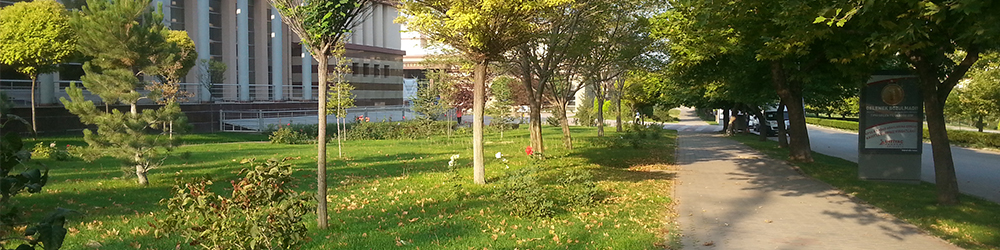
Walking Area
-
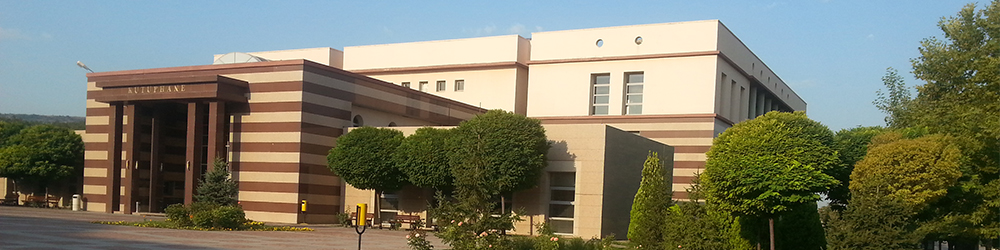
Library
-
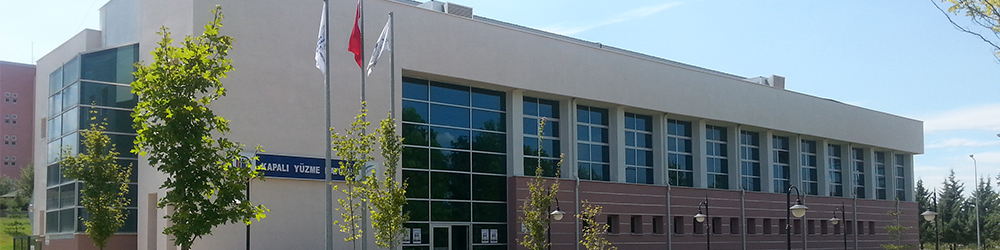
Indoor Swimming Pool
-

Rectorate Building
-
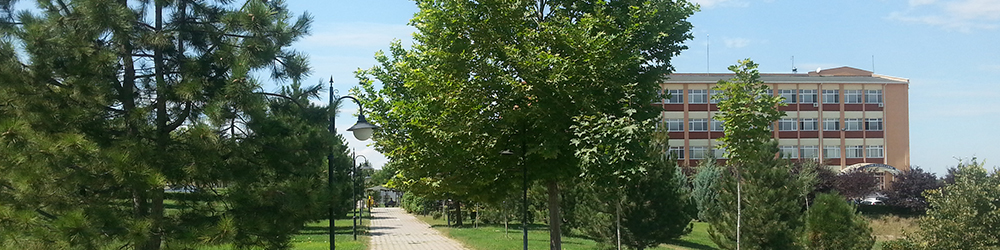
Faculty of Education
Department of Turkish Language and Literature
1. General Information
The department has two main aims: First, to train experts who have received basic training in their field and to prepare them for postgraduate education; Secondly, to prepare students at a level to conduct comparative research with other Turkish Dialects and Literatures throughout the Turkish World. A four-year undergraduate program is implemented in the department. The master's and doctoral program is carried out in coordination with Osmangazi University Social Sciences Institute, with the contributions of department faculty members.
2. Degree
Students who successfully complete the program are awarded a bachelor's degree in Turkish Language and Literature.
3. Level of Degree
Licence
4. Admission and Registration Conditions
General admission requirements for Turkish and foreign students are valid to start the program.
5. Recognition of Prior Learning
Recognition of previous formal learning in Turkish Higher Education institutions, vertical, horizontal and university transfers are carried out within the scope of the "REGULATION ON THE PRINCIPLES OF TRANSFER BETWEEN ASSOCIATE AND UNDERGRADUATE LEVEL PROGRAMS, DOUBLE MAJOR, MINOR AND INTER-INSTITUTIONAL CREDIT TRANSFER IN HIGHER EDUCATION INSTITUTIONS" determined by the Council of Higher Education. In Turkey, exemption exams are held at the beginning of the academic term for some computer and foreign language courses within the scope of recognition of certificate-based or experience-based learning outside formal education institutions. Students who take the exam and pass the exam are exempt from the relevant courses in the curriculum.
6. Qualification Conditions and Rules
Students studying in this program must have a GPA of at least 2.00 out of 4.00 and meet the conditions of the Associate and Undergraduate Education Regulations in order to graduate. The minimum ECTS required for graduation is 240. Students are also required to complete their compulsory internships, if any, within the specified time and quality.
7. Program Purpose
To provide the necessary research environment to raise students who are competent to conduct field-specific scientific research in accordance with the needs of the age, and to inculcate the habit of evaluation and production;
To equip students with theoretical knowledge and applied studies in all areas of Turkish Language and Literature, with qualified academics, taking into account the necessity of lifelong learning;
To enable students to conduct interdisciplinary investigations using data obtained from different disciplines of social sciences in order to have a comprehensive approach to socio-cultural activities;
To raise students as individuals who have critical thinking skills in human and social relations, are open to communication, and observe ethical rules.
8. Program Competencies (Learning Outcomes)
|
1a. Reads, transcribes, and transliterates texts written in the Ottoman Turkish alphabet into the modern alphabet. |
|
1b. Acquires comprehensive knowledge of the history of classical Turkish literature and recognizes the regions of its cultural geography (such as Khwarazm-Chagatai, Azerbaijani, Mamluk, Ottoman, etc.). |
|
1c. Acquires comprehensive knowledge of the history of classical Turkish literature: Identifies the general literary characteristics, prominent figures, and major works of each century. |
|
2a. Recognizes the sources of Classical Turkish literature; identifies and interprets the reflections of cultural sources underpinning Classical Turkish literature in the text such as mythology, Sufism, prophetic narratives, and the scientific knowledge of the related period. |
|
2b. Recognizes the sources of Classical Turkish literature; demonstrates knowledge of biographical sources and works that serve as sources for literary history. |
|
3a. Evaluates Classical Turkish poetry in terms of its rhythmic and harmonic elements (meter and rhyme). |
|
3b. Evaluates Classical Turkish poetry in terms of verse-forms (ghazal, qasida, and masnavi etc.). |
|
3c. Evaluates Classical Turkish poetry in terms of its genres and genre-specific features. |
|
3d. Evaluates classical period poetry and prose examples in terms of language, style, semantic dimensions, and rhetoric. |
|
Demonstrates the ability to read historical Turkish texts written in different alphabets. |
|
5a. Analyzes the grammatical features of historical Turkish texts.. |
|
5b. Knows the periods of the Turkish language by their distinctive phonological and morphological features. |
|
5c. Mastering the foundational texts in the history of the Turkish language. |
|
Uses the fundamental academic works in the history of Turkological studies. |
|
7a. Draws on the fundamental studies and theoretical knowledge in Turkish folklore, culture, and folklore. |
|
7b. Applies the scientific research methodologies specific to folklore accurately. |
|
7c. Actively employs fieldwork techniques for collecting, documenting, and archiving information from informants. |
|
8a. Analyzes folk narratives, written and oral texts in terms of their formal and structural characteristics. |
|
8b. Evaluates folkloric materials in relation to the socio-cultural contexts in which they are produced and performed. |
|
9a. Learns the historical development and transformation of traditional elements of Turkish culture. |
|
9b. Identifies the similarities and differences among folkloric elements across different geographical regions. |
|
9c. Interprets elements of Turkish culture from an integrated perspective through comparison with other cultures. |
|
10a. Evaluates the functioning mechanisms of language based on linguistic theories. |
|
10b. Applies field-specific theoretical knowledge in practice. |
|
10c. Analyzes the relationships between language and society and reports using academic standards. |
|
Analyzes texts from the Old Anatolian Turkish and Ottoman Turkish periods based on the linguistic features of the period. |
|
12a. Analyzes Türkiye Turkish on the level of phonological, morphological, syntactic, and lexical structures. |
|
12b. Classifies texts from modern Turkish dialects using comparative methods. |
|
Focuses on a specific period in the history of Modern Turkish Literature. |
|
Analyzes texts from Modern Turkish Literature. |
|
15a. Examines modern literary texts from other countries. |
|
15b. Demonstrates command of Turkish composition rules. |
|
15c. Learns literary theories. |
|
15d. Acquires oral and written communication skills. |
9. Employment Opportunities for Graduates
Graduates of the department can teach in schools affiliated with the Ministry of National Education or in private schools; They can become experts in the Ministry of Culture, Turkish Language Association, archives and work in various units of TRT.
10. Transition to Higher Degree Programs
Candidates who have successfully completed their undergraduate education can study postgraduate programs in their field or related fields, provided that they receive valid scores from ALES or equivalent exams and have sufficient foreign language knowledge.
11. Exams, Assessment and Evaluation
(1) The success of the student is determined by taking into account the success level of mid-term exams, homework, practice, laboratory and similar studies and the results of the final exam. The dates of these exams are determined by the relevant board of directors and announced to the students within the first four weeks of the semester.
(2) The weight of mid-term studies, exam and final exam in determining success is entered into the system by the instructor teaching the course within the first two weeks of the relevant semester and announced to the students. However, the total weight of mid-term evaluations cannot be less than 30% and more than 70%.
(3) In courses based on project, laboratory and application principles, there is no obligation to comply with mid-semester and end-semester evaluation limits.
(4) Exams where students' knowledge and skills are measured; midterm exam and mid-term studies, final exam, make-up exam, excuse exam, make-up exam, single course exam and exemption exam.
(5) If necessary, exams can be held on Saturdays and/or Sundays with the decision of the relevant board of directors.
(6) Relevant faculty members and exam invigilators are responsible for ensuring that the exams are held in accordance with the rules.
(7) The student must take the exams at the time and place specified in the exam program. Otherwise, their exams will be considered invalid. The grade the student receives as a result of taking an exam that he/she does not deserve to take will be canceled even if it has been announced.
(8) As a result of the disciplinary investigation opened against him, the exam of the student who is found to have cheated, attempted or assisted cheating in any exam, will be deemed invalid and a raw grade of zero will be given for that exam.
(9) Midterm exam is the exam held within the semester from the courses prescribed in the relevant education program. At least one written midterm exam is given for each course. Exams for courses that require personal skills can be taken practically. Apart from this exam, short-term exams, applications based on the student's skills, assignments and similar in-term studies can be done on the basis of the success letter grade.
(10) The final exam is the exam that the student will take at the end of the semester for the course in which he/she is registered. The days and times of the final exams are organized and announced by the relevant academic units on the dates specified in the academic calendar.
(11) Make-up exam: Make-up exam is not held in programs where summer school is offered. In programs where summer school is not offered, make-up exams are held on the dates specified in the academic calendar by the decision of the relevant board of directors.
(12) Make-up exam: The student can take the make-up exam for all exams that he could not take because he was assigned by the University or due to exam conflicts. When the make-up exams will be held is determined by the decision of the relevant board.
(13) Excuse exam: Excuse exam is an exam held for students who cannot attend the exams for a justified and valid reason accepted by the relevant board of directors. The student must apply to the relevant academic unit with a petition and its attachment within three business days following the expiry of the excuse. Midterm make-up exams are held before the end of the semester. In case of a make-up exam, no excuse is given for the final exams. The final excuse exam is held on a working day in the first week following the end of the semester final exams. No excuses are given for short-term exams. Students who cannot take the make-up exam for any reason are not given the right to take a second make-up exam. A student whose excuse is accepted by the relevant board of directors cannot attend classes or take exams within the period of his excuse. Exams taken during this period are canceled by the decision of the relevant board.
(14) Exemption exams are exams held at the beginning of the academic year for students newly registered to the University. These examinations and evaluation procedures are carried out according to the principles to be determined by the Senate.
(15) Taking into account the disability status of disabled students, within the framework of the current legislation, the relevant unit is authorized by the board of directors to prepare and implement special education programs and examination methods.
(16) Single course exam: A student who has only one course left for graduation and who has met the requirement to take the final exam is given the right to take a single course exam for the failed course once during his/her education, on the dates specified in the academic calendar. The grade received from a single course exam is used as the passing grade of the relevant course. You are not given the right to take a single course exam for courses that are entirely applied. In partially applied courses, the relevant unit's boards decide. No excuses are given for single course exams. The procedures and principles regarding the implementation of the exams are determined by the Senate.
Evaluation;
(1) A student's success in a course is determined by the relative evaluation method. This evaluation is made by evaluating the student's success in mid-term studies and the grade he received in the final exam; It is done by taking into account the general success level of the class, the distribution of grades and the class average.
(2) Student evaluations are made on a whole number within the 0-100 grade range. At the end of the required exams and similar evaluations for each course they take, students are given the course success grade by the course instructor, according to the relative evaluation principles determined by the Senate; It is converted into letter success grade and success coefficient as follows.
a) Coefficients and success letter grades are evaluated as follows:
Success Grade Coefficient Degree of Success
AA 4.00 Okay
BA 3.50 Good-Excellent
BB 3.00 Good
CB 2.50 Medium-Good
CC 2.00 Medium
DC 1.50 Conditionally Pass
DD 1.00 Conditionally Passed
FF 0.00 Failed
(3) The lower limit of DD cannot be 34 out of 100 or below. Evaluations of courses that are not included in grade point averages and are not linked to the coefficient are made as follows:
a) DZ (Absentee) grade is given to the student who does not fulfill his/her course attendance obligations. In GPA calculation, FF is counted. The student repeats the course in which he received a DZ grade.
b) YT (Satisfactory) grade is given to the student who is successful in non-credit courses that are not included in the grade point average, upon the recommendation of the department, the decision of the relevant board of directors and the approval of the Senate.
c) YZ (Unsatisfactory) grade is given to the student who fails non-credit courses that are not included in the grade point average.
ç) MU (Exempt) grade is the grade of the course for which the right to exemption is granted by the decision of the relevant board of directors.
d) TN (Incomplete) grade due to excuses accepted by the instructor; It is given to the student who does not complete the required work on time in projects, applications, final papers and similar courses. The student who receives this grade must complete his/her shortcomings within two weeks following the end of the final exams. However, before the end of this period, the instructor may grant additional time to the student, if the student applies and is approved by the relevant administrative board. The TN grade of the student who does not complete his/her deficiencies by the end of the given period will be converted into an FF grade.
e) DÇ letter grade; It is the grade given to the course in which the student has registered for the course and for which it is deemed appropriate to withdraw from the course by the decision of the relevant board.
12. Graduation Requirements
(1) In order for a student to complete the program he/she is registered in and receive a diploma, in addition to having a GPA of at least 2.00, he/she must receive at least a DD or YT grade from all courses in the education plan, complete 240 ECTS in the undergraduate degree and 120 ECTS in the associate degree and succeed in compulsory internships. . A student who meets these conditions before eight semesters by complying with this Regulation can receive a diploma in a shorter period of time.
(2) A student may be granted an associate degree on the condition that he or she successfully completes the courses in the first four semesters of the undergraduate program in which he or she is registered, maintains his or her graduation grade point average, and disenrolls from the program he or she is attending.
13. Working Mode (Full Time, e-learning)
Full Time and e-Learning
14. Address and Contact Information (Department Head, Assistants and Erasmus Coordinator)
Eskişehir Osmangazi University Faculty of Arts and Sciences Department of Turkish Language and Literature 26480 Meşelik Campus / ESKİŞEHİR
Prof. Dr. Melike Gökcan (Head of Department)
Assoc. Dr. Aslı Büyükokutan Töret (Department Vice President)
Dr. Duygu Kamacı Gencer (Department Vice President)
Assoc. Dr. Dilek Erenoğlu Ataizi (Erasmus Coordinator)
15. Opportunities
There are 10 professors, 5 associate professors, 4 doctoral faculty members, 3 lecturers and 2 research assistants in the department. There are 18 offices, 4 classrooms and meeting rooms in the Turkish Language and Literature department. Projectors are available in all 4 classrooms. The department also has a lounge and library.
16. Academic Staff
Department of Classical Turkish Literature
Prof. Dr. Melike Gökcan (Head of Department)
Prof. Dr. Ahmet Kartal
Assoc. Dr. Tuba Onat Çakıroğlu
Res. A. Saniye Eraslan Kaleli
Department of Modern Turkish Literature
Prof. Dr. Soner Akpınar (Head of Department)
Prof. Dr. İbrahim Şahin
Prof. Dr. Sahika Karaca
Prof. Dr. Eylem Dereli
Assoc. Dr. Deniz Depe
Old Turkish Language Academic Staff
Prof. Dr. Ferruh Ağca (Head of Department)
Dr. Esin Agca
Dr. Buket Nur Kırmızıgül Şimşek
Department of Modern Turkish Language
Prof. Dr. Erdoğan Boz (Head of Department)
Prof. Dr. Bulent Gul
Prof. Dr. Dilek Erenoğlu Ataizi
Assoc. Dr. Fatih Doğru
Assoc. Dr. Duygu Kamacı Gencer
Lecturer Metin Erdogan
Lecturer Ugur Bilge
Lecturer Dr. Süleyman Alper Sökmen
Department of Folk Literature
Prof. Dr. Aslıhan Büyükokutan Töret (Head of Department)
Prof. Dr. Kürşat Öncül
Prof. Dr. Adem Koç